After James White’s initial attempts to introduce a hymn book that emphasized the distinctly Adventist gospel and doctrines, a number of other hymn books were released over the next century. These were:
- 1869 – Hymns and Tunes for Those Who Keep the Commandments of God and the Faith of Jesus
- 1886 – The Seventh-day Adventist Hymn and Tune Book (Hymns and Tunes)
- 1908 – Christ in Song
- 1941 – The Church Hymnal
But the work and direction that James White initiated was lost. With each new hymn book there were very few new songs written specifically to make prominent and clear the messages that God had given to Adventists. Instead there was more and more reliance on, or borrowing from, modern Protestant hymnals of the day.
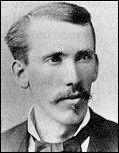 One of the more talented Adventist composers of the late 19th and early 20th centuries was Franklin Edson Belden (1858-1945). He was born to the sister of Ellen White, and therefore was Mrs. White’s nephew. He settled in Battle Creek in the early 1880’s and served as one of the music editors for the 1886 Hymns and Tunes. He also worked together with his cousin, James Edson White, on several projects, such as The Song Anchor for Sabbath School and Praise Service, an oblong songbook of 164 pages, as well as publishing a non-denominational book of songs for children in 1892, Bible Object Lessons and Songs for Little Ones.
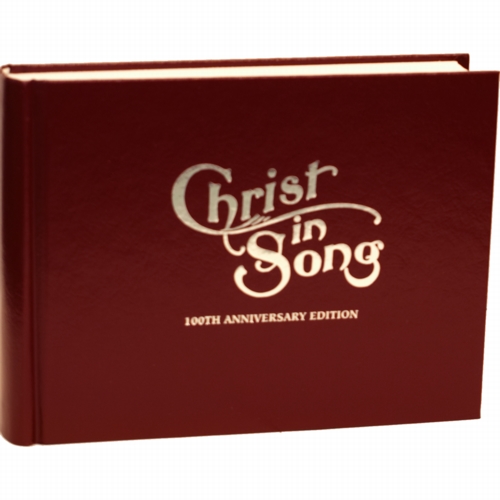 His last hymn book, Christ in Song, was first printed in 1900, and then a revised version was released in 1908. The songbook was used by Seventh-day Adventists for decades after that.
Although he unquestionably was talented, we have to ask, did he contribute to making the unique Adventist message more clear? Did he, through the ministry of song, set the particular testing truths for the time plainly before the people?
We have to say, no. He did not clearly distinguish between the “everlasting gospel” as contained in the Three Angel’s messages of Revelation 14, and the Protestant “gospel” that was popular in that time. This is shown by his work of:
- writing songs for Protestant evangelists, like Billy Sunday;
- publishing non-denominational songbooks for children;
- borrowing many songs from the fallen churches;
- writing songs which lacked the clear emphasis needed to show the difference between the true and false gospel.
The Protestant churches had rejected the “everlasting gospel” in William Miller’s time, about 40 years earlier. So if they rejected it, then they couldn’t also have it. In fact, the prophetic word indicated that they had become “Babylon”, churches that have the vessels or form of truth, but put in those vessels their own “wine”, which are teachings or interpretations which confuse people, and make them think they are safe in Jesus’ care when in fact they are still in their sins.
To understand how the message should be presented clearly, consider the example of Jesus, who came for one specific purpose: to do His Father’s will, and to speak His Father’s words:
John 6
38 For I came down from heaven, not to do my own will, but the will of Him that sent me.
John 14
10 …the words that I speak unto you I speak not of myself: but the Father that dwells in me, He does the works.
Jesus was very clear. He brought to his nation the offer of salvation, and of cooperation with Him in the Father’s work against sin and Satan. This was very offensive to many, because their gospel told them they were safe and secure, whereas Jesus’ gospel told them they were lost and in bondage. In Nazareth, the town He grew up in, they even tried to throw him off a cliff.
Likewise, the Apostles and early church also had a clear message: Jesus and Jesus only. Peter boldly proclaimed:
Acts 4
10 Be it known unto you all, and to all the people of Israel, that by the name of Jesus Christ of Nazareth, whom you crucified, whom God raised from the dead, even by Him does this man stand here before you whole.
11 This is the stone which was set at nought of you builders, which is become the head of the corner.
12 Neither is there salvation in any other: for there is none other name under heaven given among men, whereby we must be saved.
These words would have offended many people in that day, because they did not accept Jesus as the Messiah, but as an imposter. But Peter came right to the point, he didn’t try to make it softer. He knew that the disease of their soul required strong medicine, and that many would be lost if they wavered. The trumpet had to give a clear sound.
Ezekiel 33
6 But if the watchman see the sword come, and blow not the trumpet, and the people be not warned; if the sword come, and take any person from among them, he is taken away in his iniquity; but his blood will I require at the watchman’s hand.
So there would have been no friendly cooperation between the Jewish teachers and Jesus, or with the Jewish teachers and the apostles. They had taken their stands, and would walk in separate paths.
Now we come back to the Belden’s time. Historically, at this time, the Seventh-Day Adventist church was in the “Laodicean” condition:
In the early years after the 1844 experience, Sabbatarian Adventists identified themselves as the church of Philadelphia, other Adventists as Laodiceans, and non-Adventists as Sardis. However, by 1854 Ellen White was led to point out that “the remnant were not prepared for what is coming upon the earth. Stupidity, like lethargy, seemed to hang upon the minds of most of those who profess to believe that we are having the last message…You suffer your minds to be diverted too readily from the work of preparation and the all-important truths for these last days.” – Herbert Douglass, Messenger of the Lord, ch. 23
The particular problem of the Laodicean church, as mentioned in Revelation 3, is that they consider themselves rich, when in actual fact they are poor and naked. It is a similar condition to the Jews in Jesus’ time.
The poverty is a spiritual problem, and the riches used to cover this nakedness take many forms—taking pride in buildings, establishments, or numbers of converts; outward prosperity; multiplying charity works; lengthy arguments proving doctrines; elaborate musical or drama presentations—these can all be used to cover the spiritual poverty.
Then suddenly, in 1888, the Lord sent two young ministers to the church with a message to bring them out of that Laodicean condition. Ellen White testified to the divine origin of this message:
Testimonies to Ministers, p. 91:
The Lord in His great mercy sent a most precious message to His people through Elders [E. J.] Waggoner and [A. T.] Jones. This message was to bring more prominently before the world the uplifted Saviour, the sacrifice for the sins of the whole world. It presented justification through faith in the Surety; it invited the people to receive the righteousness of Christ, which is made manifest in obedience to all the commandments of God.
Letter 24, 1892:
The Laodicean message has been sounding. Take this message in all its phases and sound it forth to the people wherever Providence opens the way. Justification by faith and the righteousness of Christ are the themes to be presented to a perishing world.
This later became known as the “1888 message” after the year in which it was first presented, although the message was ministered and grew for about another 10 years after that.
The “justification by faith” taught by Waggoner and Jones was not the same as the doctrine taught in the Protestant churches of their day. It was distinctly Adventist, focusing on:
- Christ’s complete identification with sinful human flesh, which proved that humanity combined with divinity can live without sin;
- And therefore the ability of His life in us to keep all the commandments of God.
- The cleansing of sin’s power from the heart by the power of God’s word.
- No excuses were made for sin, all could reach the high standard of the Law and the Judgment through the grace that Jesus would impart.
- The nature of the image of the beast, and the Sabbath/Sunday conflict: the conflict was not just a struggle over two different days of worship, but rather a struggle over two different gospels.
- The finishing of the gospel call to the world and perfection of the church.
- The cleansing of the sanctuary in heaven (preceded by the cleansing of the church from all sin), and the great final struggle after that, in which God’s character would be revealed in its fullness through the saints, and be finally vindicated.
These were some of the elements of the revived Adventist gospel.
But many did not recognize it. They had been taught a different gospel. They wrote to Ellen White and said,
“Is this the third angel’s message? Because it isn’t what we thought the third angel’s message was.”
She replied:
Review and Herald, April 1, 1890:
Several have written to me, inquiring if the message of justification by faith is the third angel’s message, and I have answered, “It is the third angel’s message in verity.”
Frank Belden was one of the men who had much difficulty with the 1888 message. So much so, in fact, that he never really accepted it, and some time after became bitter towards Ellen White, and the church, and became separated from the denomination around 1907.
His songs never supported this clear Adventist gospel. Instead, they were very much like the Protestant hymns of the day, speaking much about the love, forgiveness, and blood of Jesus, but never coming down to the details of defining what these things are, how they are ministered, and what is the difference between the true and false teaching on these points.
And the compromising principles by which his songwork was done, continued as standard practice in the Seventh-day Adventist church until the Awakening message. When the Brinsmead Awakening message was given, real Adventist song was revived again, and music was made to serve as a vessel for the clear gospel light God was giving through the messages of Revelation 14 (and 18). You can verify this by simply reading some of the lyrics of the few songs we have posted in the Awakening section of this website.
When those of us in the Sabbath Rest Advent Church, who were involved in starting our first songbook, considered what songs we would put into it, we assumed that we would take many songs from other Protestant hymnals, just as Frank Belden and other Adventists in his time had done. But we had also written a few new songs specifically for our message, even though it was only a handful at that time.
Then we ran into the problem of getting copyright permissions for some of the songs we wanted to use, which would have delayed the printing of our songbook. So we hesitated, and then as we worked on the project, we began to write many more new songs, and gather original songs from our churches in other parts of the world. Within a relatively short time, our new songbook was filled with almost all new compositions, written by members of our church, and usually clearly supporting our message. So there was no need to include many other songs from the past, or from other denominations. And we avoided the long process of having to obtain copyright permissions.
Writing our own songs has now become our standard practice, and I believe it is the correct course. If the good work James White began had been continued in the same spirit, we would not have had 100 years of drought, during which the clear Adventist gospel teaching through sacred song was almost utterly silent. The trumpet gave no sound, and the people were not warned.
Only as we appreciate the light God has given to us, and put our own talents into the work of presenting that light, can it be something that God can really bless. We are not to speak our own words, or our own gospel. But like Jesus, we must pay close attention to what our Father is doing and saying, and then do and say the same, in every area of our lives including the message of our songs. And though our talents be small and perhaps weak, yet God highly esteems, and will support, the willing offering from a pure heart.
Then waken into sound divine
The very pavement of your shrine,
Till we, like Heaven’s star-sprinkled floor,
Faintly give back what we adore.
Childlike though the voices be,
And untunable the parts,
You will own the minstrelsy,
If it flow from childlike hearts.
– John Keble, The Christian Year, Palm Sunday (“The Children in the Temple”)
Tags: Belden, Christ in Song, Gospel, History, James White, Laodicea, Talents


Wesley, Sorry I do not know that information.
I appreciate all of the history l’mreally trying to get two answers :When was “Yield Not To Temptation” removed from the 7th day Adventist Church hymnal and why?
Re. my earlier letter. I should also have mentioned that in that Welsh hymnbook there no fewer than ten hymns that are listed under the heading “God the Son: His Priesthood”. This compares with a mere four in the SDA Hymnal. In addition, a Baptist minister friend kindly supplied me with the texts of a further ten such that feature in Grace Hymns, a Baptist publication. When I contacted Dr Humberto Rasi at the GC with these he was astonished – he had never heard of them! A notable example, of interest to us SDAs, is one by Horatius Bonar; he and his brother, Andrew, were both leading lights in the Free Church of Scotland, which rose from what is known in that country as the Disruption. Both preached the premillenial Second Coming of Christ, and Andrew Bonar always ended a Communion season with a reference to it as the great hope of the church.Some criticised him for this, but after forty years in the ministry he declared it to have proved a blessing instead.
A final word from the compilers of Christian Hymns. There was, they said, no virtue in singing hymns just because they were old. However, they complained that the general quality of 20th century hymn-writing was not of a high order, hence their frequently reverting to Isaac Watts and Charles Wesley, as well as others that seemed to have a timeless quality about them.
Barry,
Thanks for your valuable comments. I agree that the quality in modern hymns is not usually there. Much of the writing is too superficial. A living experience in the power of God to overcome the deception and corruption of sin would make fill the hymn-writing with more fire and life. Then even a simple hymn can be very effective. But it is always wonderful when disciplined human talent is worked upon by the Spirit of God. Wycliffe is an example of such a case (as a Reformer, not a hymn-writer).
If you can send me either a photocopy of the hymns you mentioned, or at least the texts of the hymns, I would be glad to post them on this website. If you send the music also, I’ll try to set it and prepare audio files as well.
****
Note: Barry did send me the hymns and you can find them in the section The Heavenly Priesthood, under The Protestant Reformation.
I just found your website and am happy for the songs which I find published there. I have read the writings on your website and though I am not rich in music history, I do have some questions.
A song such as: “Holy Sabbath day of Rest (#654)” does it not represent the message of the SDA church?
What of #671, Look for the waymarks;
#482, The Judgment has Set, the books have been opened;
If so, your statement “you will find ‘all the hymns’ of the past inadequate to express the unique Adventist emphasis that God has given to be proclaimed to the world in these last days” is a bit misleading.
I must say that the number of songs expressing our message are too few and if that is the sentiment of your message then I will agree with you wholeheartedly.
Howard
P.S. [The numbers shown here are from the 1941 church hymnal]
Howard,
Thanks for your comment. Yes, the intent of the article is to show what I stated:
Instead of a hymn book filled with songs expressing gratitude for the messages given, many hymns were borrowed from the Protestant churches, who had not accepted the first, second, and third angel’s message. At best, Adventists had to read their message into these hymns, for it was not explicitly there.
There are still a few exceptions, as you noted. But these are exceptions! This does not show a wholehearted acceptance or understanding of the importance of the truths committed.
For example, when the apostles finally grasped the significance of the incarnation and death of Jesus Christ, they proclaimed “Christ only.” His name was their delight, and their constant theme. This will always be the case when God’s messages are grasped and appreciated.
The messages of the angels in Revelation 14 are not just a pile of interesting doctrines and prophecies separate from Christ. Rather, they are revelation of Jesus Christ to His church, and through them to the world. They are THE revelation of Christ for our time, just as much as the revelation of Christ in the flesh was THE revelation for the apostles’ time. Therefore, they should be our delight, and our constant theme. This is made particularly clear in the announcement of the First Angel who brings the “everlasting gospel” to the world.
What does the Sabbath reveal about Christ? That He is our all-sufficient Plan-Maker, Problem-Solver, and Burden-Bearer. Therefore, we can rest in Him and fully come apart from our work. By the power of the gospel, He can free us from fretting and worrying and taking things into our own hands. The Image of the Beast, on the other hand, is just the opposite. It is man’s desperate attempt to solve the world problems by his best efforts, and to try and get God’s blessing on the whole mess. But it will end in ruin. Well if God has given us the solution to this final catastrophe, do we not have something special to sing about?
We could likewise go through the other Adventist beliefs and find the same unique gospel emphasis for these last days. The whole hymn book should be filled with such songs. To settle for anything less is to show that we are “wretched, miserable, poor, blind and naked” and know it not. This is precisely the problem.
What makes a good SDA praise manual? It would take up too much space to quote them in full, but the compilers of Christian Hymns, a Welsh publication(in the English language, I should remark!)seem to have done as near a perfect job as can be, allowing for their inevitable difference between them and us as regards man’s state in death and the alleged sacredness of Sunday. Certainly, compared to the SDA Hymnal it is far better, and there is much in it that we could accept. No problem with baptism – their own convictions are for baptizing professing believers, NOT infants. Its diction and style are dignified throughout. Yes, we’d have to scrub out all those under the heading “Death and Glory”, and most of those under the heading “The Lord’s Day”(the rest can be safely included as Sabbath hymns, as they don’t specify the day). Unlike some, they don’t endorse exclusive psalmody, but at the same time they find place for metrical psalms and hymns based on the psalms. If only as a pious exercise, I am doing a compilation of my own based on this hymn book, plus the 1952 New Advent Hymnal(the last British-based one published). What it will turn out like, God alone knows.
Barry,
Thanks for your comment. I have not seen “Christian Hymns” but the Welsh are well-known for their choral talents, so I would expect a high standard in their hymn books.
I think compiling your own hymn book is a good start. That’s how I began also. But eventually, if the Advent message burns in your heart, you will find all the hymns of the past inadequate to express the unique Adventist emphasis that God has given to be proclaimed to the world in these last days. Then the duty will become plain to go beyond resting upon the efforts of our forefathers, and let our own (sleeping) talents be used by His grace to proclaim the final warning message to the world.
This is what my article was intended to make plain.
We are in the Laodicean time-period of church history. Laodicea is “rich and increased with goods,” and thinks that she needs nothing more. Are we “rich and increased” with the hymns of the past, so much so that we have need of nothing more? Then this is an indication of our Laodicean condition. The Lord sees us as wretched, miserable, poor, and naked, because we do not have our own living tradition of song. He wants to give us so much more!
Frank.